

Medieaval Hungarian, Austrian and German Painting and Sculpture
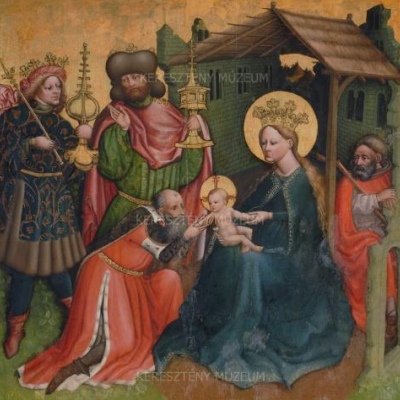
In contrast to the earlier, printed summaries, we did not separate the works according to their origins in Hungary or the Austrian and German territories. From a professional standpoint, the often close art historical connections between the objects of various regions clearly justify their treatment as units. Moreover, the place where the works were made or first used frequently cannot be determined prior to a thorough analysis of the stylistic connections and in the absence of exact information about their origins. Earlier, identifying many important works from the collection of Arnold Ipolyi was difficult and full of uncertainties. However, among the inventories in the recently published Ipolyi estate dossier, one was discovered dating to September 1916, prior to the transfer of the works to Budapest. It provided considerably more information than other known records to date. As a result, objects from the Ipolyi Collection can now be identified with relative assurance. (In the provenance section of each entry, we quoted the pertinent texts as verification). A lot of uncertainty surrounds questions of attribution too: we decided artists and workshops based on persuasively argued (new) results or on known determinations from earlier literature. For attributes that are entrenched in public knowledge but have been modified recently in the art history literature, we have put the names in parenthesis (for example, the Master of Jánosrét, or the first and second masters of Aranyosmarót), while indicating our present opinions. Emese Sarkadi Nagy, PhD, Art historian