

The collection of the Christian Museum preserves outstanding works of Hungarian and international Christian art. The purpose of the online catalogue is to make this rich and diverse collection readily accessible to the general public, researchers, educators and students alike.
The catalogue presents works from the Museum’s collections of painting, sculpture and decorative arts, as well as from its other groups of objects. Individual records provide basic information about the works, descriptions, details of their materials and techniques, and historical information, together with photographs, inscriptions, marks and bibliographical references where available.
The database is continuously being expanded. The published information reflects the current state of collection cataloguing and research; consequently, individual identifications and descriptions may be revised or supplemented in the light of new findings.
We hope that the online catalogue will not only facilitate navigation through the collection, but will also bring the holdings of the Christian Museum closer to visitors and encourage further exploration.
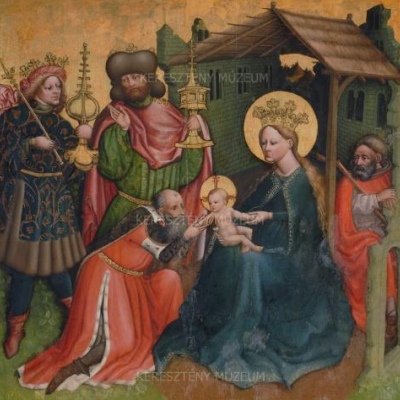
Medieval Hungarian, Austrian and German Painting and Sculpture
The President of the Art History Committee of the Hungarian Academy of Sciences presented the Opus Mirabile Award for the most outstanding art-historical work of 2017 to Emese Sarkadi Nagy for the online catalogue of the Christian Museum’s medieval objects from Hungary and from the German and Austrian territories.
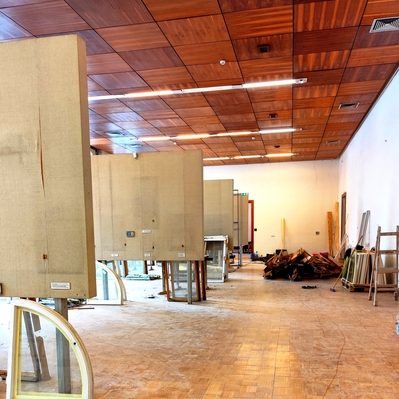
Italian renaissace and baroque painting (permanent exhibition)
The more than one hundred exhibited works of the world renowned Italian collection of the Christian Museum present an almost unbroken overview of Italian painting between the late 13th and 18th centuries

Medieval Netherlandish Painting (Permanent Exhibition)
The collection of Netherlandish paintings in the Christian Museum does not give as complete an overview of the art of the region, as the Italian collection does, but it includes some outstanding works. Memling’s and Jan van Hemessen’s works indicate the significance of the late Gothic and the Flemish Renaissance on an exceptional level, and the collection contains also some less recognized but important works from the Northern Netherlands.
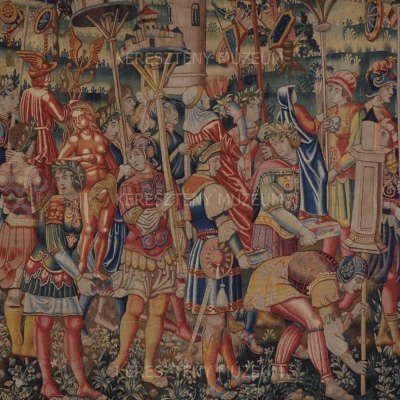
Woven Tapestries
The collection represents several important centres of medieval and early modern European tapestry art, including Brussels, Tournai, Bruges, and Oudenaarde. Alongside religious subjects, historical and mythological themes are also found in the depictions.

19th–21st-Century Painting (Permanent Exhibition)
The museum’s founder, János Simor, regularly purchased and commissioned works from contemporary artists whom he held in high esteem. He showed a particular preference for paintings and works on paper with an explicitly religious character. The twentieth- and twenty-first-century works entered the Museum’s collection primarily through acquisitions connected with temporary exhibitions, as well as through occasional donations and purchases. K. I.

Decorative arts (permanent exhibition)
The permanent exhibition of the decorative arts collection focuses primarily on secular works. Porcelain, metalwork and small boxes are displayed in separate thematic showcases. Several tapestries and an Anatolian carpet displayed on the walls represent the diversity of the collection. Most of the objects come from the San Marco–Nákó bequest.

Selected Works from the Collections
The Memory of Holy Years on Papal Medals (exhibition, 2024–2025); tapestries; prints by Antoni Waterloo; József Pituk’s Divine Comedy; works by Ernő Fischer; prints by László Nádas; Piroska Szántó’s biblical paintings; and prints by Arany Bazsonyi.

Collection of Prints and Drawings
The graphic collection, numbering more than 5,000 items, preserves prints, watercolours, and drawings from five centuries. The sheets largely come from the collection of Archbishop János Simor, the museum’s founder.

19th century Paintings and Sculptures
The museum founder János Simor’s intention was to collect the art of old times in order to promote the understanding of contemporary art in any given period. He also regularly commissioned and purchased works from the living artists he appreciated. He favoured especially paintings, prints, and drawings created in a deeply religious spirit

Icons and Orthodox Metalworks
The earliest, 16-17th century icons in Esztergom are of Greek and South-Italian origin and were acquired from Arnold Ipolyi’s collection. Besides the Russian icons, a few 19th-20th-century pieces represent the icon-painting art of the peoples of orthodox