Medieval Hungarian, Austrian and German Painting and Sculpture
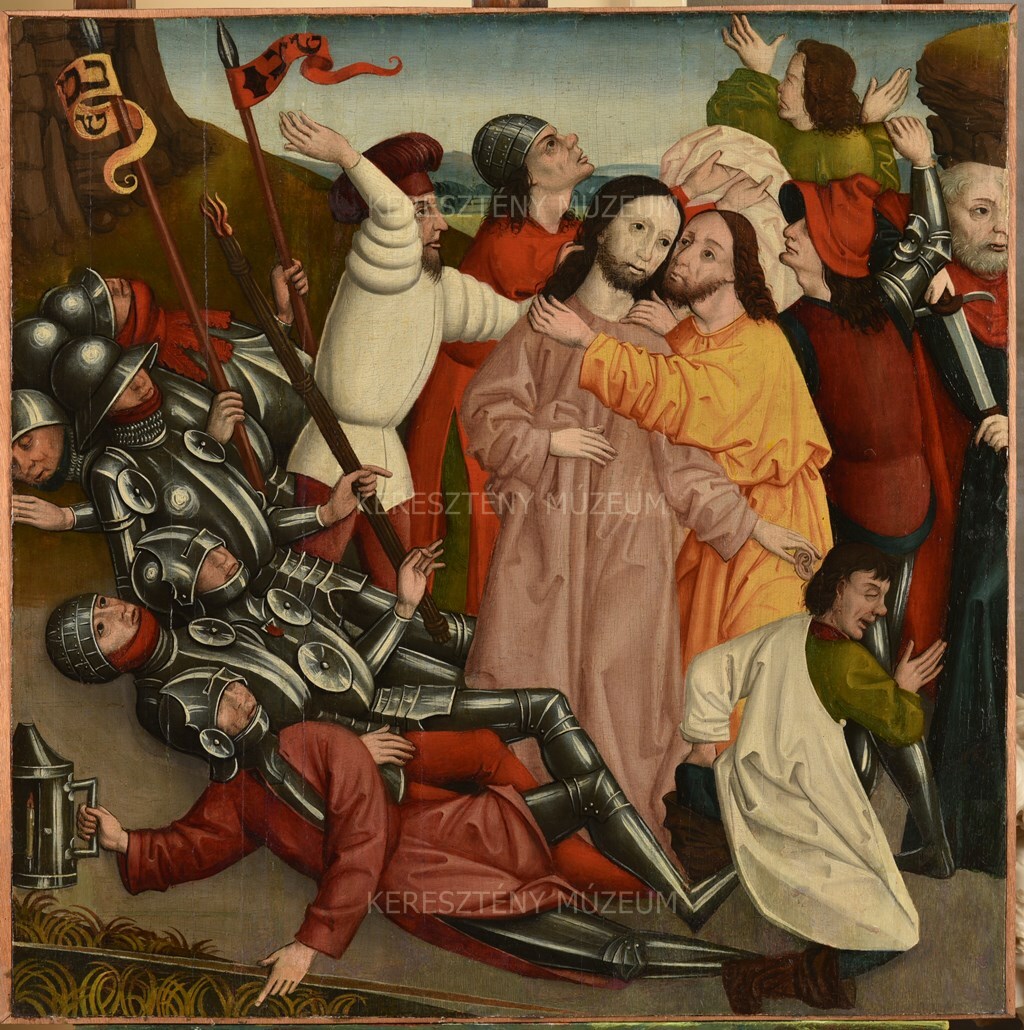
Panel painting, sawed in two, from a winged altarpiece: The Kiss of Judas
Description and further information
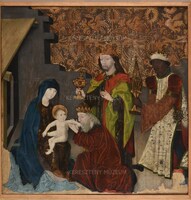
The depiction adorned the outer side of the movable wing of a winged altarpiece. The panel, originally painted on both sides, was sawed in two, perhaps in the 19th century. The inventory of the Ipolyi Estate refers to the Adoration of the Magi, (numbered 56.501 in the Christian Museum) as its recto. (Lakatos-Balla 290). The painting is slightly trimmed and shows traces of earlier overpaintings and additions that were not removed during later restoration.
Provenance
Initially in the collection of Blasius Höfel, before being acquired by Karl Lemann and then Arnold Ipolyi. ‘75. The Kiss of Judas. Image from an altarpiece wing on a wood panel. End of the 16th c. 73. Adoration of the Magi. The sawed-off recto of the previous-mentioned painting.’ (Lakatos-Balla 290)
Restauration
19th century (?) overpaintings and additions. Dezső Varga, 1961 (removed earlier infills, overpaintings and bracing); Károly Botond, 1973-74 (retouched the work and transferred it to a new panel); Dezső Varga, 2013 (repaired flaking retouches).
Bibliography
- Lakatos-Balla Attila: Ipolyi Arnold püspök hagyatéka Nagyváradon. Miscellanea Historica Varadinensia III. Nagyvárad 2012 290
- Mucsi András: Az esztergomi Keresztény Múzeum Régi Képtárának katalógusa. Budapest, 1975, Corvina , 25.
- Boskovits Miklós-Mojzer Miklós-Mucsi András: Az esztergomi Keresztény Múzeum képtára (Budapest, 1964. Akadémiai Kiadó), 157.
- Magyarország műemléki topográfiája I. Esztergom 1. Esztergom műemlékei (összeállította: Genthon István; Budapest 1948), 128.
- Archaeologiai Értesítő ÚF. XLVI. 1932-1933 (1934). 121-136. 207-208., 134.
- esztergomi Keresztény Múzeum festményeinek történetéhez)
- Pigler Andor: „Evagationes spiritus” (Egy képmagyarázat és adatok az
- Theodor Frimmel: Lexikon der Wiener Gemäldesammlungen, II. München 1914, 178.
- Verzeichniss einer Sammlung altdeutscher Gemählde...Wien 1839., 23. sz.
Related works