Medieval Hungarian, Austrian and German Painting and Sculpture
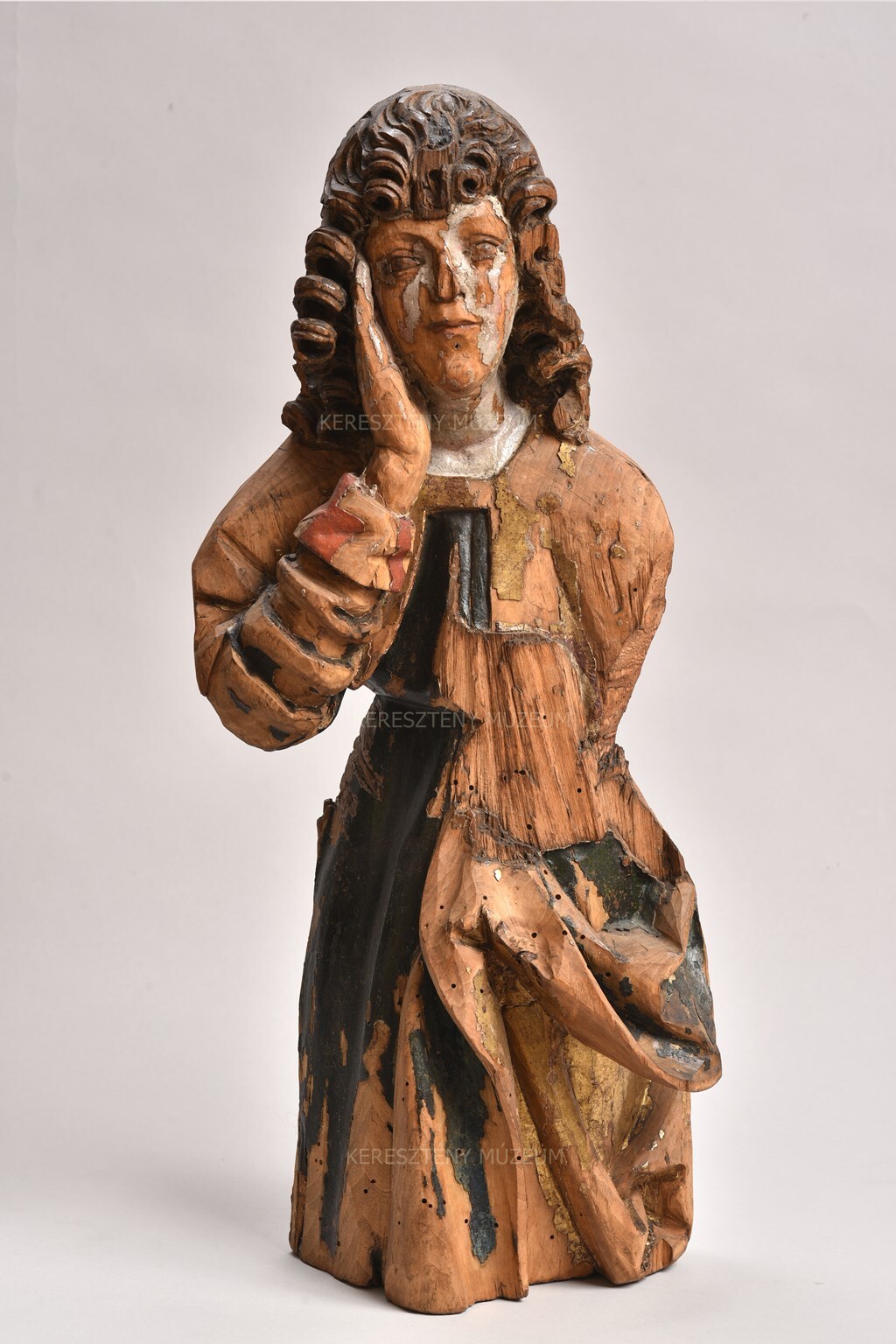
Fragment of a statue of a male saint (presumably St. John the Evangelist) – Perhaps fragments from a former Crucifixion scene
Description and further information
19 x 19 x 12 cm
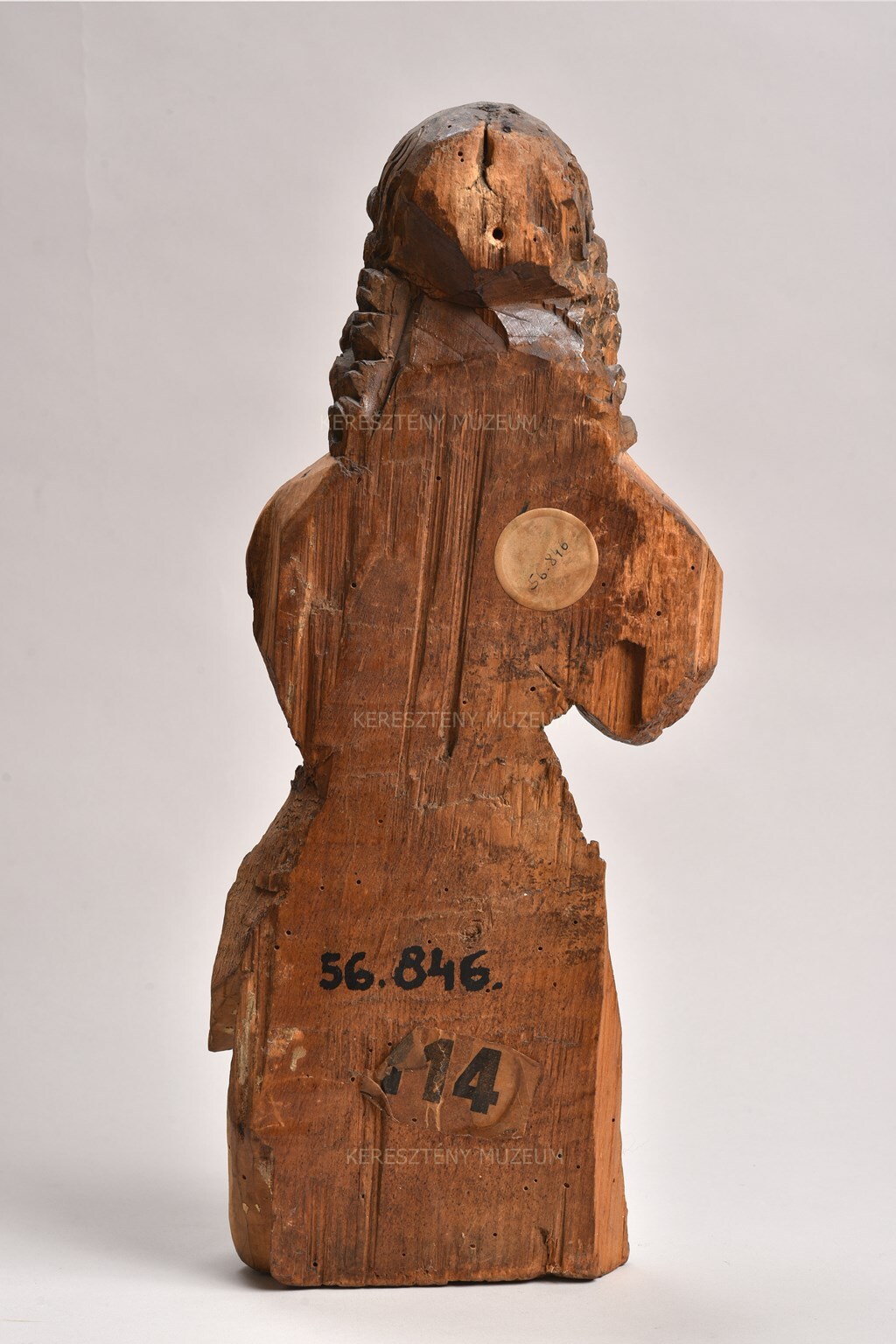
The statue is made of wood and sawed off at the knees. The type of depiction and the gesture of the hands raised to the face, expressing pain, strongly suggest that the work is a representation of St. John the Evangelist. Presumably it was the companion piece to the Mary of Sorrows statue (inv. no. 56.843), both belonging to the same composition. The entire surface of the statue is strongly abraded. Of the original polychrome, the gilding of the cloak; the blue, the green lustre and the red of the tunic; and the skin colour on the face and neck are clearly discernible. In many places the wood is very damaged. Furthermore, the figure’s left arm is missing and several folds in the chest and belly areas are broken. The elbow and the drapery covering it were roughly carved with a roughing gouge or small ax. On the left, from the shoulders to the hips, evidence can also be seen of deliberate defacement. A tooking plane was used to create a rough, flat surface on the back. Restorers’ examinations of the surviving layers of paint revealed these were original, with no signs of later repainting.
Provenance
Ipolyi Collection. ‘193. Low relief wooden statue of John the Evangelist. Cut off at the knees. Domestic (Hungarian). No. XV.’ (Lakatos-Balla 290).
Restauration
Attila Ferenczy, 1994-95
Bibliography
- Lakatos-Balla Attila: Ipolyi Arnold püspök hagyatéka Nagyváradon. Miscellanea Historica Varadinensia III. Nagyvárad 2012 279
- Radocsay D.: A középkori Magyarország faszobrai, Budapest, 1967, 174.
- Magyarország műemléki topográfiája I. Esztergom 1. Esztergom műemlékei (összeállította: Genthon István; Budapest 1948), 151.
Related works