

Italian renaissace and baroque painting (permanent exhibition)
Adoration of the Magi
documented 1356-1372
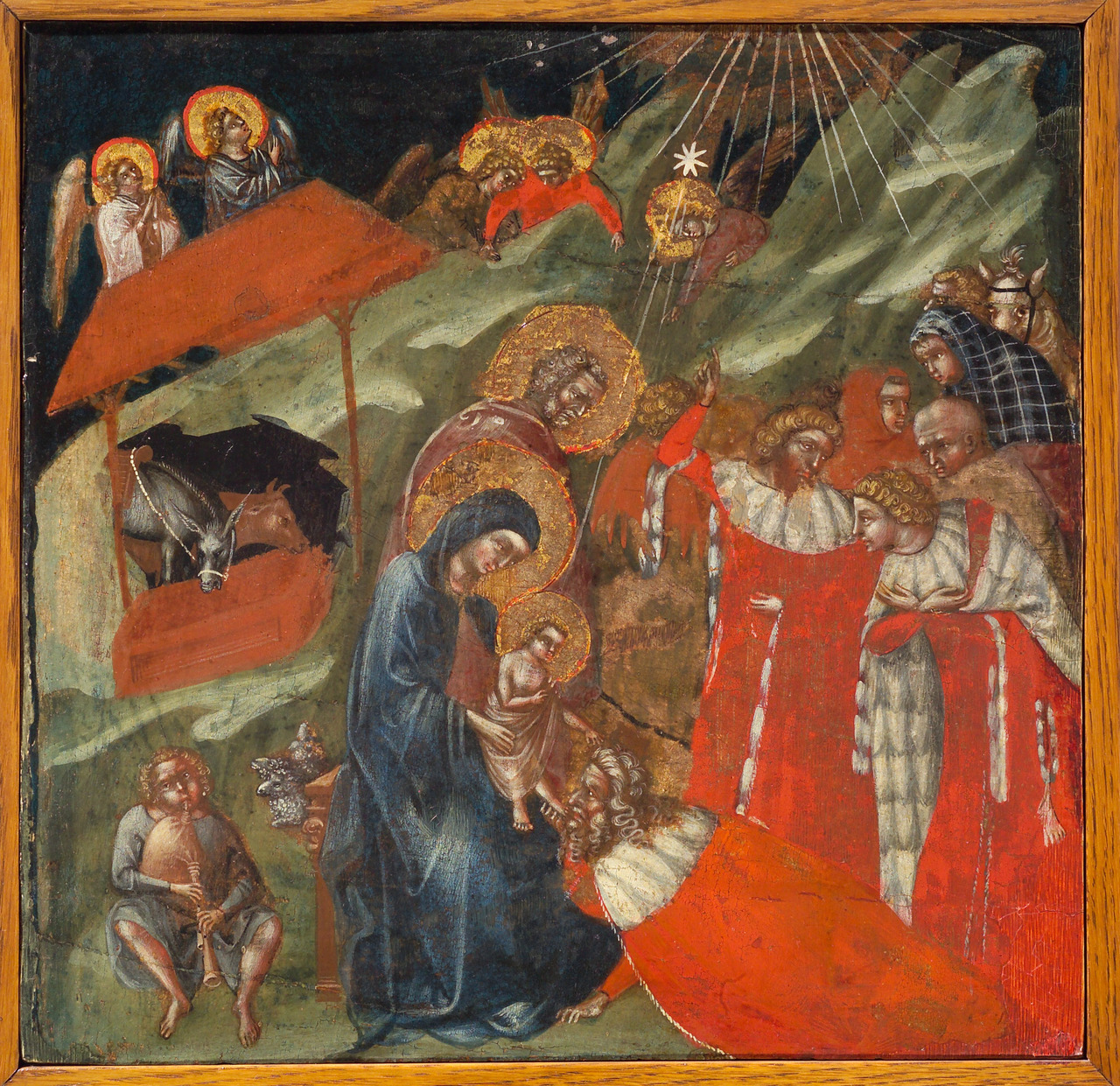
Description and further information
The painting is pervaded by a dynamic sense of movement, further intensified by the diagonal axis of the rocky hillside. This diagonal is intersected by the group of the Holy Family, which is linked in a semicircular arc with the old Magus and the angels in the sky. The figure of the Child, appearing on the vertical axis of the composition, is also emphasized by the golden ray of light from the Star of Bethlehem. The painter, who is connected to Byzantine tradition chiefly through his colours and through the depiction of the setting and surroundings, already follows the iconography of Gothic art. According to this tradition, Saint Joseph also stands beside Mary, who presents her Child—no longer quite an infant—to the aged ruler. His companions and attendants marvel at the scene, while others observe it with curiosity. The different states of mind are reflected not only in the faces, but also permeate the gestures of the figures. This profound expressive power—which was to become one of the most characteristic features of Italian Trecento art—most clearly indicates the influence of Western Gothic art. The painter, who was not a Byzantine but a distinctly Trecento artist, probably worked in Venice; in nearby Padua he became acquainted with the art of Giotto and Giovanni Pisano, and may also have seen works by Tommaso da Modena and Vitale da Bologna. Integrating these new artistic influences organically, he nevertheless preserved the Byzantine pictorial type and certain Late Antique elements. (Prokopp Mária, 1993)
Provenance
Ipolyi collection
Restauration
1969 Varga Dezső
Bibliography
- Mauro Minardi: Un Arcangelo per gli inizi guarienteschi di Lorenzo Veneziano. in: Arte Venete 77/2020, 8-19., 10, 14, 18, fig. 10, fig. 13.
- Cséfalvay Pál, szerk.: Keresztény Múzeum, Esztergom. Budapest, 1993. Corvina, 219, kat.sz. 79. ("velencei festő, 14. század közepe") (Prokopp Mária)
- Boskovits Miklós-Mojzer Miklós-Mucsi András: Az esztergomi Keresztény Múzeum képtára (Budapest, 1964. Akadémiai Kiadó)
- Mucsi András: Az esztergomi Keresztény Múzeum Régi Képtárának katalógusa. Budapest, 1975, Corvina, 38.
- Boskovits Miklós: Korai olasz táblaképek, Budapest, 1966, 46-47. 46-47 "Paolo és Lorenzo Veneziano stílusához közeli a 14. század közepéből")
- Boskovits Miklós-Mojzer Miklós-Mucsi András: Az esztergomi Keresztény Múzeum képtára, Budapest, 1964. Akadémiai Kiadó, 50, 52. ("bizantinizáló velencei festő a 14. század elejéről")
- Magyarország műemléki topográfiája I. Esztergom 1. Esztergom műemlékei (összeállította: Genthon István; Budapest 1948) ("Duccio iskola")
- 1932 E. Berti- Tosca (Dedalo, XII.) ("bizánci befolyás alatt dolgozó velencei festő 14. század első feléből")